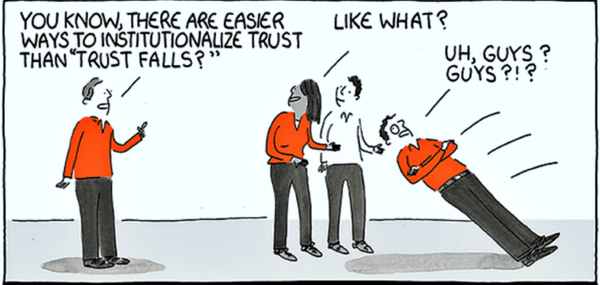
Office Politics, Trust, and the Quiet Work of Building a Healthy Team
Most conversations about office politics focus on how to win them.
That’s usually the wrong goal.
In my experience, the healthiest teams aren’t politics-free. They’re politics-aware. The difference is whether energy gets spent on protecting status, or on doing the work.
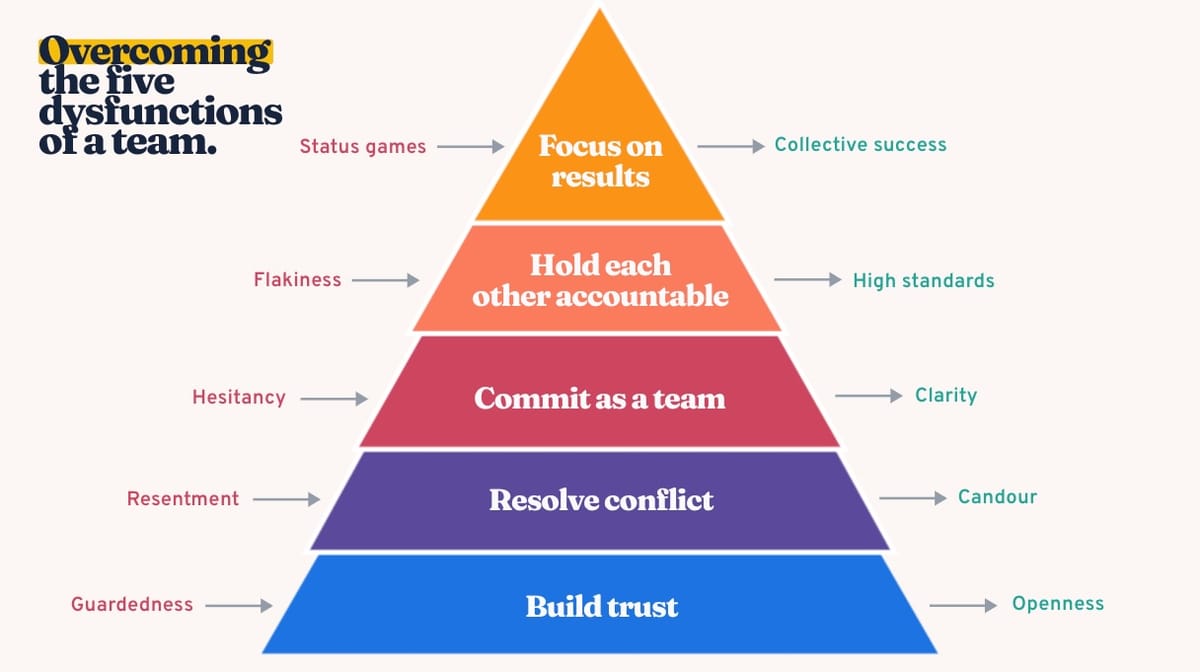
Patrick Lencioni’s Five Dysfunctions of a Team gets quoted a lot, but what’s missing is how these dysfunctions actually show up day to day, especially in engineering environments where intelligence and ego often collide.
This is how I’ve seen it play out in real teams, and what it actually takes to build a healthy culture from the ground up.
1. Trust is not psychological safety posters
The base of the pyramid is trust, but not the corporate version.
Real trust shows up when:
- people admit they don’t know
- mistakes are surfaced early, not hidden
- questions aren’t treated as weakness
- disagreement doesn’t feel risky
In teams without trust, office politics thrive quietly.
People hedge. They over-communicate upwards and under-communicate sideways. They protect themselves first.
I’ve learned that trust isn’t built by saying “this is a safe space.”
It’s built when leaders consistently:
- stay calm when things go wrong
- don’t punish honesty
- don’t reward heroics that hide systemic problems
People watch what happens after failure. That’s where culture is set.
2. Conflict avoidance is where resentment is born
Many teams pride themselves on being “nice.”
That’s often code for unresolved tension.
When conflict is avoided:
- decisions are made in side channels
- meetings become performative
- resentment builds quietly
- politics move underground
Healthy conflict isn’t about being aggressive.
It’s about being clear.
The strongest teams I’ve been part of could disagree openly, then leave the room aligned. That only happens when people trust that disagreement won’t be used against them later.
As a leader, this meant learning to invite tension rather than smooth it over.
Not escalating. Not dominating. Just not dodging it.
3. Commitment comes from clarity, not consensus
One of the biggest mistakes I’ve made earlier in my career was thinking buy-in required unanimity.
It doesn’t.
Teams commit when:
- the decision is clear
- the reasoning is shared
- the direction is explicit
- the owner is obvious
Lack of commitment creates space for politics because ambiguity invites interpretation. People fill in the gaps with their own narratives.
Clarity collapses that space.
I’ve seen teams move faster once leaders stopped trying to make everyone happy and focused instead on making the decision legible.
4. Accountability dies when leaders flinch
Peer accountability only works when leaders model it first.
If leaders:
- avoid hard conversations
- tolerate flaky behaviour
- let standards slide under pressure
Then politics replaces accountability.
People notice quickly who gets away with what.
Once standards feel negotiable, trust erodes and status games take over.
The most effective teams I’ve worked with didn’t rely on formal process to hold people accountable. They relied on shared norms, reinforced consistently, especially when it was uncomfortable.
That consistency matters more than intensity.
5. Results beat status, every time
At the top of the pyramid is focus on results.
This is where politics either dies or becomes dominant.
When outcomes matter more than image:
- credit is shared
- egos soften
- collaboration improves
- progress accelerates
When status matters more than outcomes:
- people optimise for visibility
- ownership fragments
- delivery slows
- trust erodes
As a leader, shifting the focus to collective results often meant de-emphasising individual heroics, including my own. That wasn’t always easy, but it was necessary.
Teams perform better when success feels shared and failure feels safe to examine.
So how do you build a healthy culture, practically?
Not with big declarations. With small, consistent behaviours.
From my experience:
- say the thing others are avoiding, calmly
- be explicit about decisions and ownership
- protect people when they speak honestly
- address issues early, not dramatically
- reward behaviours that reduce friction, not just output
Healthy cultures aren’t loud. They’re stable.
And office politics don’t disappear. They just lose their power when trust, clarity, and standards are real.
This work is slow. Often invisible. Always worth it.
The best teams I’ve been part of didn’t feel perfect. They felt grounded.
That’s the goal.